We are preparing for ExpoDetergo 2026
Quality controlled, verified and built through a rigorous process
When textiles enter an industrial laundry and are intended for professional use, quality cannot remain a generic promise. It must be measurable, verifiable and consistent over time.
That is why, when we talk about certified products, we are first and foremost talking about control. Control of raw materials, composition, fabric characteristics and the finished product. Every stage matters, because every stage affects product performance, durability and the value it can generate for those who purchase and use it every day.
Quality begins long before the finished product
A reliable product does not happen by chance. It begins with the selection of raw materials, the way they are processed, the weaving and manufacturing stages, and the ability to accurately verify what enters the production process and what comes out of it.
This approach makes it possible to work more consistently throughout the entire supply chain and achieve a more reliable result: professional textiles capable of maintaining their performance, perceived comfort and consistency in use even under intensive washing conditions.
For the end customer, all of this translates into a very tangible advantage. A better-controlled product helps you work more effectively, reduce potential issues and build a more stable supply over time.
Internal controls and real investment in quality
Over the years, FTC has chosen to significantly strengthen its internal quality control capabilities, investing in equipment and expertise that make product verification more thorough and reliable. The page dedicated to our laboratory illustrates this development: the enhancement of the laboratory with high-definition microscopy and the use of advanced analysis to examine fibres, yarns and fabrics in greater depth.

This type of investment has a very specific purpose. It is not simply about saying that a product is high quality. It is about demonstrating that quality more rigorously, identifying potential non-conformities before they become a problem and maintaining a higher level of consistency throughout production.
What does “certified product” mean in practice?
For us, it means being able to rely on textiles that undergo real inspections, carried out carefully and with the appropriate equipment. It means knowing that composition is checked, raw materials are tested, any impurities are identified and removed, and the structure of fibres and yarns is analysed to ensure greater consistency and durability.
But it also means something more. It means building a relationship of trust with the customer, because behind every product there is more than just a supply service: there is a culture of quality that shapes the choice of materials, the control processes and the attention given to the final result.
But it also means something more. It means building a relationship of trust with the customer, because behind every product there is more than just a supply service: there is a culture of quality that shapes the choice of materials, the control processes and the attention given to the final result.
Value that extends throughout the supply
For an industrial laundry, a hospitality business or a professional operator, a well-controlled product is not simply “better” in abstract terms. It is better suited to the demands of professional use. It is more reliable over time. And it is better equipped to support a service that needs to remain consistent, well organised and dependable.
Quality, therefore, is not only about the fabric itself. It is also about the margins that product can help protect, the durability it can provide, the operational peace of mind it can offer and the continuity that makes supply management easier.
Research, laboratory expertise and product responsibility
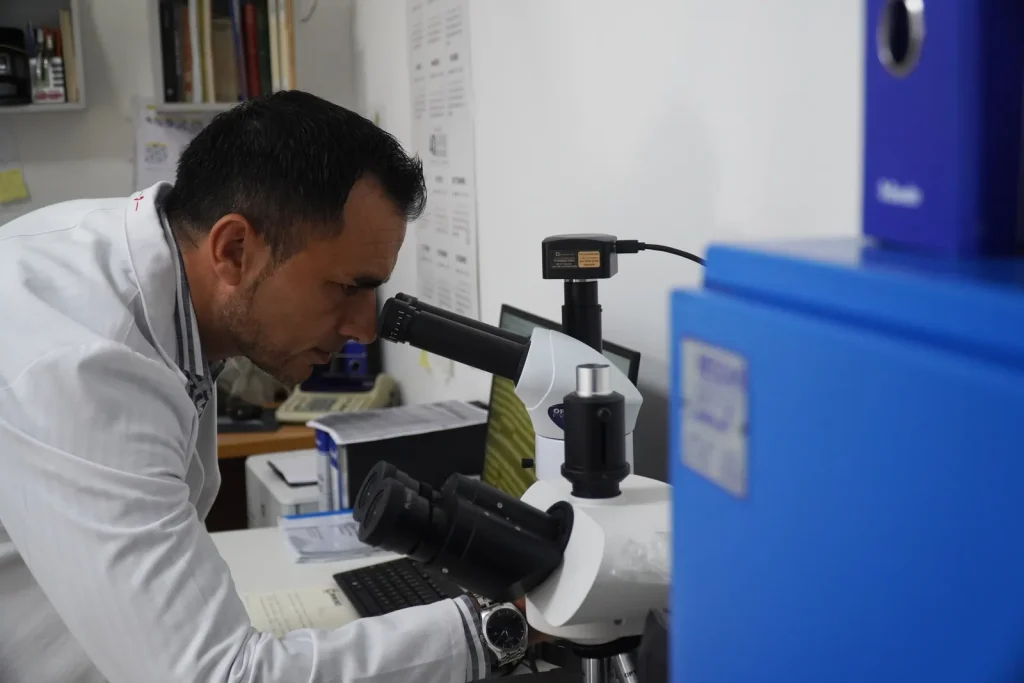
This focus on control is part of a broader vision: not simply selling a product, but truly understanding it, studying it, verifying it and improving it.
This is where the internal laboratory plays a strategic role. Not as an additional feature, but as a tangible part of a way of working that places raw materials, processes, quality and the final result at the centre.
When we say that a product must meet the standards of the professional market, this is exactly what we mean: it must reliably meet the needs of those who purchase it, those who wash it, those who use it and those who build their own service around it.